
中国沙漠里,这座镜场光热电站令人叹为观止
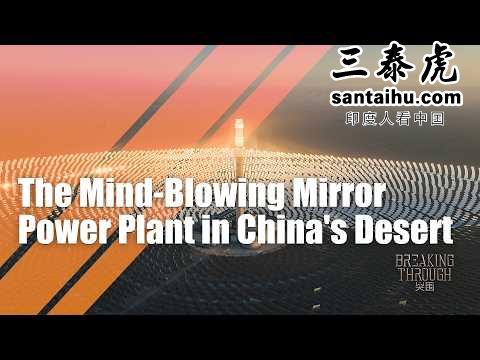
The Mind-blowing mirror power plant in China's desert
中国沙漠里,这座镜场光热电站令人叹为观止!
Historically Dunhuang, on the northeastern edge of the Taklimakan Desert, was a Han Dynasty commandery and a hub on the Silk Road. Today, it's the location of China's first 100-megawatt molten-salt tower solar thermal plant. With more than 12,000 heliostats, it stores heat and generates power around the clock, despite the constant menace of sandstorms. As a way of mitigating the threat, a greening project is underway, restoring the vegetation by planting saxaul and using precision drip irrigation. Also, the sand is being controlled through the creation of wind-sand corridors.
历史上,地处塔克拉玛干沙漠东北边缘的敦煌,曾是汉代的郡治,也是丝绸之路上的交通枢纽。如今,这里坐落着中国首座百兆瓦熔盐塔式光热电站。电站配备超过 12000 台定日镜,即便常年饱受沙尘暴侵扰,依然可以储存热量,实现全天候发电。
为降低风沙带来的危害,当地同步推进绿化工程:种植梭梭树、采用精密滴灌技术恢复地表植被,同时修建防风固沙带,治理风沙
以下是各国网友的评论:
bluffdotcom
Took my son to hex corridor last summer when he graduated from high school. The solar power and wind power were unbelievable. We can drive for hours and still won’t see the end of solar farms. We saw at least half dozen of these molten salt tower solar thermal plants. These towers were like the light house in the sand ocean.
去年夏天,我儿子高中毕业,我带他去了河西走廊游玩。当地的风电、太阳能设施,场面十分震撼。我们开车连续跑好几个小时,一望无际的光伏电站,望不到边。我们亲眼见到至少六七座熔盐塔式光热电站。这些高塔,就像是沙海之中的灯塔。
heybamanba1
I just watched a video from Itchy Boots that traveled through this area. They have oil production in the middle of the desert with a 400 km road. They've ingeniously created a plant buffer on both sides of the Tarim Highway to stop blowing sands from covering the road. Nothing new for this ancient civilization. They built the Karez underground tunnels for water in the area over 2000 years ago.
沙漠腹地有油田,还修了一条400公里长的公路。当地人巧妙地在塔里木公路两侧种上植被带,防止流沙掩埋路面。中国是一个文明古国,这类工程不算什么。两千多年前,这里就修建了坎儿井地下引水隧道。
dawnezone8491
Thank you CHINA for all your ingenuity!!
感谢中国,佩服你们满满的巧思!
Jean‑philippe‑g3w
CHINA SPEAKS TO PLANET EARTH
中国在向整个地球交出答卷
hehumancanary131
What about the dicky‑birds that fly near the molten salt tower ‑ are they roasted in an instant?
那飞到熔盐塔附近的小鸟怎么办?会不会瞬间被烤焦?
yuncle2
I'll never understand why they don't use those mirror plants to desalinate sea water.
我一直想不通,为什么不用这种镜面光热电站来做海水淡化。
elisabethbornsen6591
CHINA MARAVILHOSA ESPETACULAR
中国,你们太了不起了啊,太太壮观了啊
gaylandbarney2231
just to remind people , the one very similar project in the Mojave desert in california , u.s.a. FAILED quite a few years ago.....there are many miraculous IDEAS that don't work , so when i see exuberant stories like this i smile , esp. of it claims to be innovative / revoutionary.
提醒大家一下,美国加利福尼亚莫哈韦沙漠,就有一个高度相似的项目,好几年前就彻底失败了。很多构想听起来很厉害,实际根本行不通。每次看到这类报道,我就一笑置之,尤其还宣称是什么创新、革命性技术,我就呵呵了。
beyondfossil
You're referencing an old 1st‑generation CSP design at Ivanpah in California and extrapolating it simply to the current generation.
We need to delve a bit into the details.
Firstly, Ivanpah was outcompeted by the low prices of solar photovoltaics...
Specifically, Ivanpah is a 1st‑generation "direct‑to‑steam" facility, meaning it had zero energy storage. This turned out to be a fatal design mistake. The rapid decline in solar photovoltaics (PV) after 2010 (and still ongoing) helped reduce Ivanpah's revenue because both PV and CSP operated during the same daytime hours, and PV had significantly lower costs. Still in 2026, photovoltaics' unprecedented price declines continue. Solar PV reached historically low costs many years ago and continues to drive costs lower.
Energy storage now key to CSP...
To have a chance of competing, CSP needs to deliver more than solar photovoltaics can. An obvious approach is to store all that thermal energy in materials such as molten salt, graphite, and ceramic/sand. With this capability, CSP with storage can provide power at night, sidestep competition from PV and avoiding revenue starvation. Energy storage also sidesteps the one weakness of renewables: variability.
That's why Chinese CSP always uses energy storage built directly into the design, not as an afterthought...
There are even 3rd‑generation CSPs that will not use molten salt to avoid the high corrosion problems associated with it. Instead, they will focus on solid‑state storage materials such as graphite, ceramics, and sand, which do not corrode. Also, molten salts break down above 565°C. But ceramics can easily withstand temperatures from 1,000°C to 1,500°C, increasing thermal efficiency and capacity significantly (refer to the Carnot work limit).
Energy storage is absolutely key in the next stage of renewable evolution. But CSP continues to have serious challenges from PV and battery storage as their costs keep plummeting. This is all good, healthy competition, though, as the consumer wins in the long run.
你拿的是加州伊万帕那个老旧第一代光热电站案例,还直接把它对比当代技术。我们得把细节讲清楚。
首先,伊万帕项目是败给了价格低廉的光伏。具体来说,伊万帕属于第一代直接产蒸汽的电站,完全没有储热能力。这是致命的设计缺陷。2010年之后光伏价格持续暴跌,直到现在。光伏和光热电站都只能白天发电,但光伏成本低得多,直接挤压了伊万帕的收益。就算到2026年,光伏价格还在史无前例地下跌。光伏成本多年前就已经跌到历史低位,还在继续往下压。储热,是如今光热发电的核心。
想要有竞争力,光热发电就要做到光伏做不到的事。很直接的思路就是,用熔盐、石墨、陶瓷砂石这类介质储存热能。带储热功能的光热电站,晚上也可以发电,避开和光伏的正面竞争,不会出现没有收入的窘境。储能还解决了新能源最大短板:供电不稳定。所以中国的光热电站,从设计之初就内置储能,而不是后期再加装。
现在还有第三代光热技术,直接放弃熔盐,避开熔盐腐蚀严重的问题。改用石墨、陶瓷、砂石这类不会腐蚀的固态储热材料。另外熔盐超过565摄氏度就会变质失效,陶瓷却可以承受1000‑1500摄氏度高温,大幅提升热效率与发电能力(参考卡诺循环理论)。
储能是新能源下一步发展的重中之重。不过光伏、蓄电池的成本持续暴跌,光热发电依旧面临巨大压力。但这是良性竞争,长远来看最终受益的是客户。
TAL142
failed because of high cost treat these kinds of projects as for profit. China has the economy of scale and control the entire supply chain. China has spent an estimated approxmately $222 billion on its ultra‑high‑voltage (UHV) transmission network not on bombs. It is about providing cheap energy for the economy not selling them for profit. This is just like highway projects was build to move people and goods not collecting tolls to make money for local government.
美国项目失败根源就是造价太高,而且这类项目被完全当作盈利项目。中国拥有规模优势,完整掌控整条产业链。中国投入约2220亿美元建设特高压输电网络,钱没有花在武器上。建设这套体系,目的是给国民经济提供廉价电力,不是靠卖电赚钱。就像修建公路,初衷是方便人和货物通行,不是为了靠过路费给地方政府牟利。
beyondfossil
Furthermore...
Another advantage of CSP is that it uses straightforward components without relying on large amounts of semiconductors and batteries. CSP will use mirrors, concrete, salt, graphite, sand, and pi. All these materials are common worldwide. It also uses "old‑style" pressure and steam technology that the West is more familiar with and proficient at.
We often hear in the Western media complaining about dependence on China for solar PV and batteries—so CSP is a direct answer to that. I'm not arguing either way, but CSP's simpler supply chain is clear. I think there's room for both PV and CSP in the end, provided that CSP technology can catch up. There's a lot of room for CSP to grow into, as the 3rd‑generation CSP designs show.
再说一点。光热发电另一个优势,设备构造简单,不需要消耗大量半导体和电池。用到的主要是反射镜、混凝土、盐、石墨、砂石、管道。这些材料全球到处都有。整套技术用的是传统压力、蒸汽工艺,西方国家本身就很熟悉,技术积累深厚。
西方媒体经常抱怨光伏、电池领域受制于中国。光热发电恰恰可以解决这个痛点。我不站队,但光热产业链更加简单,这点毋庸置疑。只要光热技术持续迭代,光伏和光热两种路线,未来完全可以共存。从第三代光热方案就能看出来,这项技术还有很大发展空间。
sjsrana
Amazing implementation of natural resources of sun !!
中国太棒了,充分利用了太阳能这种自然资源
tanhooifen5229
awesome China
中国太伟大了
serbsrb
We love you China!
我们喜欢你,中国!
tevethompson3638
China is the Saudi Arabia of renewable energy. Respect
中国就是新能源领域的沙特,令人佩服得五体投地。
kevinmorales7745
Excellent way for energy. However, that much e energy focused into one point. Will have an extremely radius or heat, I thought they will have heat protection.
这样的发电方式非常好。但是巨量能量汇聚到一点,会形成范围极大的高温区域,我还以为会做专门的隔热防护。
tinc002
What is the different efficiency of the technology between solar panel and super mirror generate? Which one is more cost effective and efficiency.?
普通光伏板和镜面光热发电,两者发电效率差多少?哪个性价比更高,综合效率更好?
namename‑qb5xe
why dont they wash it at night? or do they do that to?
为什么不在晚上清洗镜面?还是说本来就会晚上清洗?
epsilonxvi5675
US failed their own project like this XD
美国之前搞过同类项目,不过已经失败了啊,哈哈
mathiaslist6705
unfortunately, the reason why China has it, America and Israel is merely propaganda ... just one megaproject to show but what we need is serial production and a real share of it on the electricity market
可惜,中国、美国、以色列搞的这类项目,很多只是宣传噱头。只靠一两个样板工程没用,真正需要的是规模化量产,切实在电力市场占据份额才行。
kwestionariusz1
Nice but it must be heated with other fuels in night.
看着很不错,但到了夜里,应该得靠别的燃料来补热吧。
yankeeBlue
Spain invented it
China stole the idea
这项技术是西班牙发明的中国窃取了这个创意
Darius Jack
Tell your journalist to stop her delusional fake.
Solar mirror thermal plant is very old technology which generates thermal not electrical energy
镜面光热电站是很老旧的技术,它产出的是热能,不是电能。
SNADI/SNAT Solar
China always plans big and far!!!
中国向来布局宏大,眼光长远!
noor_noorulhuda
China thinking is positive while West currently pondering negatively
中国看待事物的思维积极,而西方看待事物的思维消极
ron tannert
Hey XH,
China GDP per capita $14,700
US GDP per capita $92,800
Chinese families don't use much electricity...they can't afford it!
嘿,看这个。
中国人均GDP14700美元
美国人均GDP92800美元
普通中国家庭用电量并不高,他们用不起电啊
john baran
why do they depend on so much oil to run their country. and they built coal plants monthly.
为什么这个国家运转还要消耗大量石油,而且每个月都还在新建煤电厂。
Stolyarov
The target tower is a really funny thing. I wouldn't be there for a million dollars; the radiation there is insane.
聚光接收塔这东西想想就吓人。就算给我一百万美元,我也不愿意待在那附近,辐射强度高得离谱啊。
Baron Dellingshausen
What exactly is futuristic about that? Those things have been around for over half a century. It just goes to show once again how backward they still are.
这东西哪里算得上未来科技?这类设备半个世纪前就有了。这只能再一次说明,他们依旧很落后。
声明: 三泰虎 原创译文,此文由三泰虎网编辑,禁止转载,否则追求法律责任!


